
August 30, 2019 – Once south of Chicago, we transition from the Chicago River to the Chicago Sanitary and Ship Canal.
Ewwww!
Condensed, from our friends at Wikipedia,
The Chicago Sanitary and Ship Canal, historically known as the Chicago Drainage Canal, is a 28-mile-long (45 km) canal system that connects the Chicago River to the Des Plaines River. It reverses the direction of the Main Stem and the South Branch of the Chicago River, which now flows out of Lake Michigan rather than into it. The related Calumet-Saganashkee Channel does the same for the Calumet River a short distance to the south, joining the Chicago canal about halfway along its route to the Des Plaines. The two provide the only navigation for ships between the Great Lakes Waterway and the Mississippi River system.
The canal was primarily built as a sewage treatment scheme. Prior to its opening in 1900, sewage from the city of Chicago was dumped into the Chicago River and flowed into Lake Michigan. The city’s drinking water supply was located offshore, and there were fears that the sewage could reach the intake and cause serious disease outbreaks. Since the sewer systems were already flowing into the river, the decision was made to dam the river and reverse its flow, thereby sending all the sewage inland where it could be treated before emptying it into the Des Plaines.
You can bet the cities downstream weren’t to happy about that.
Anyway, we begin to see very industrialized areas, and many, many barges staged (either loaded or unloaded) for carrying goods up or down the river.
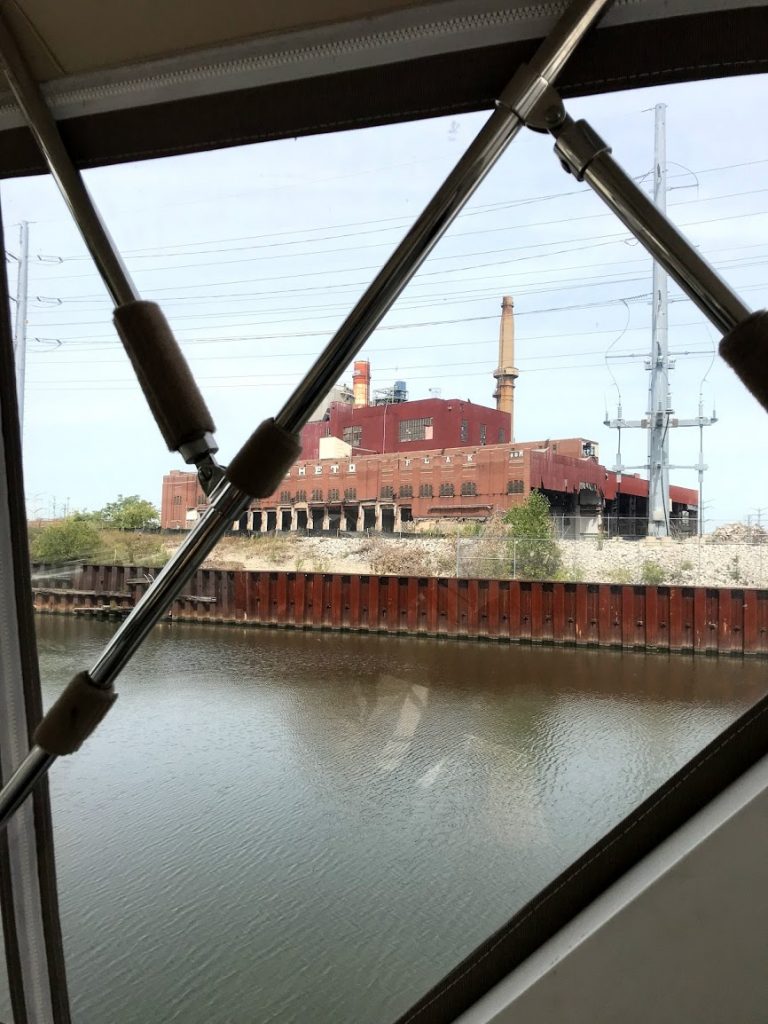
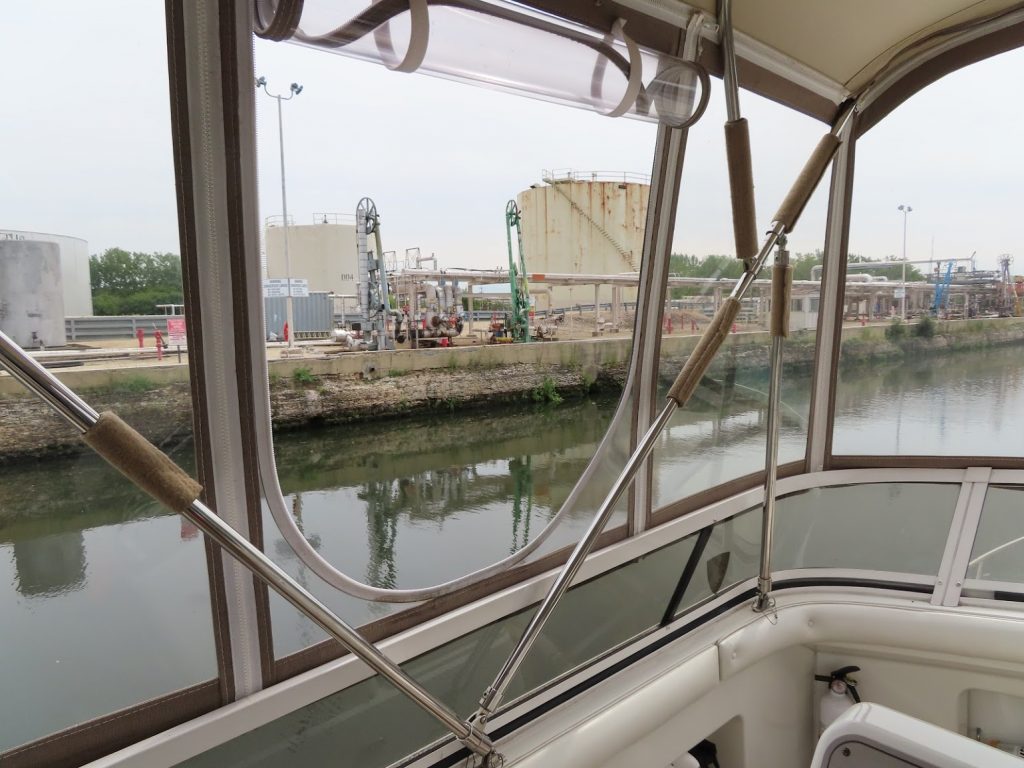
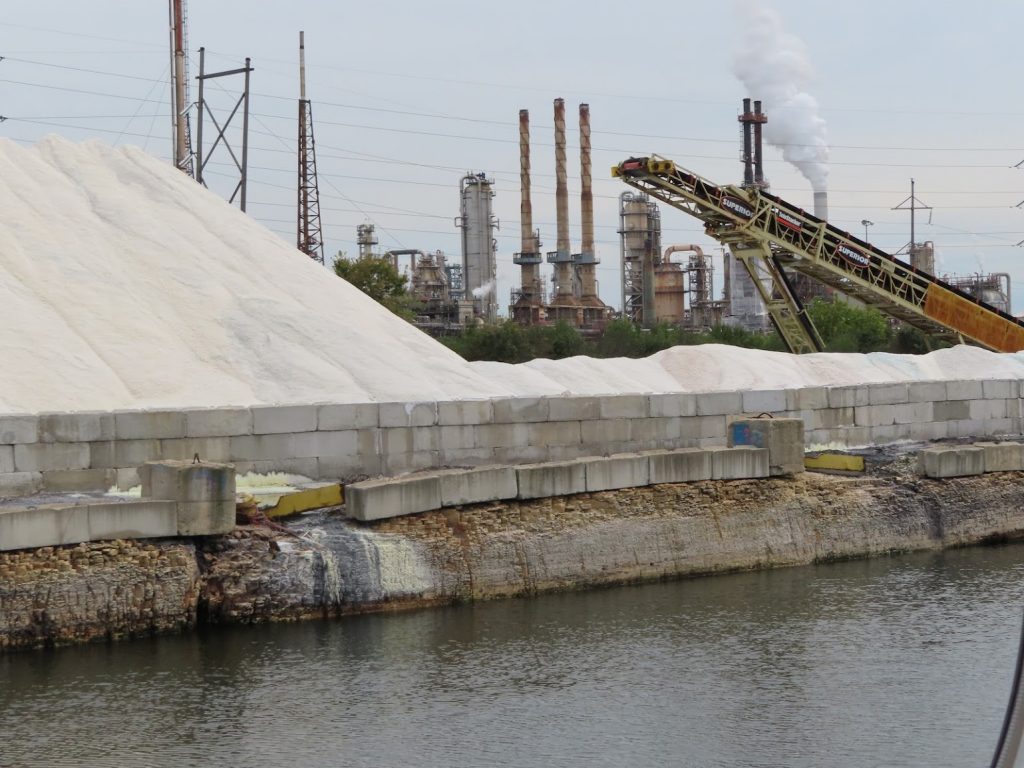
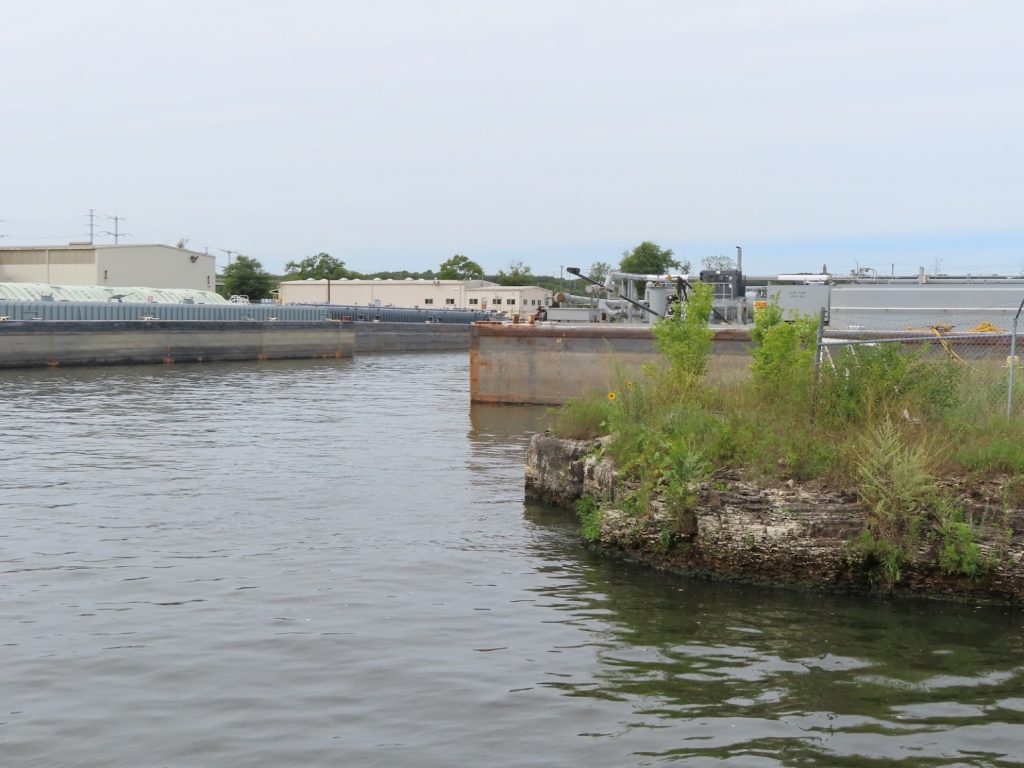
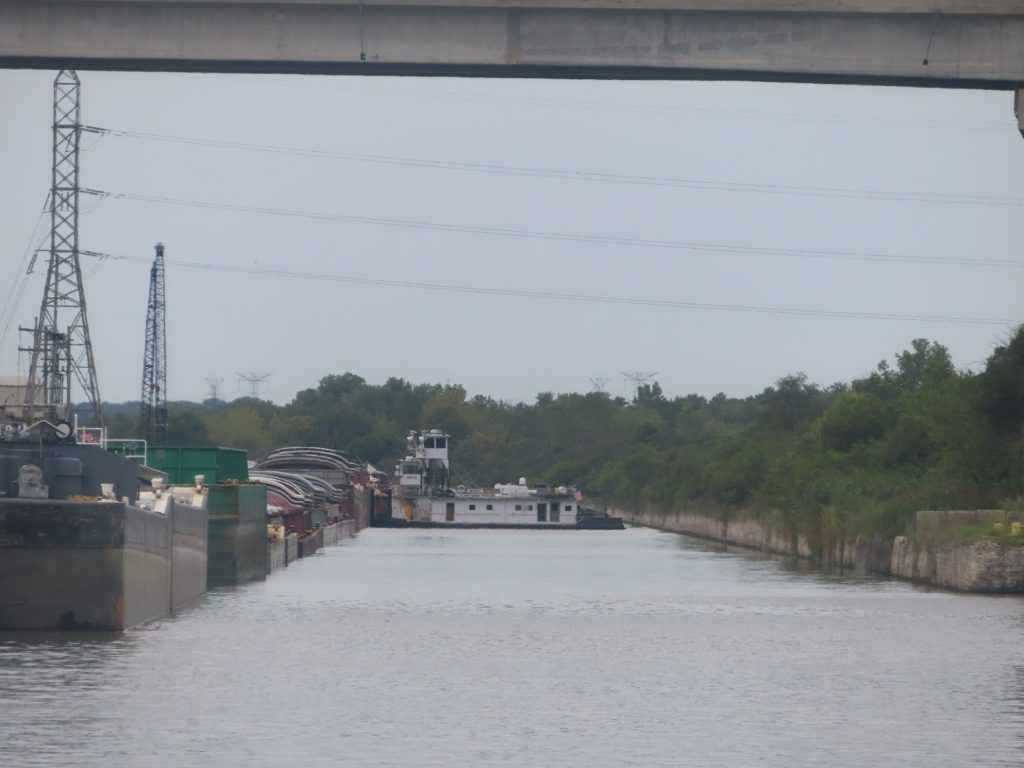
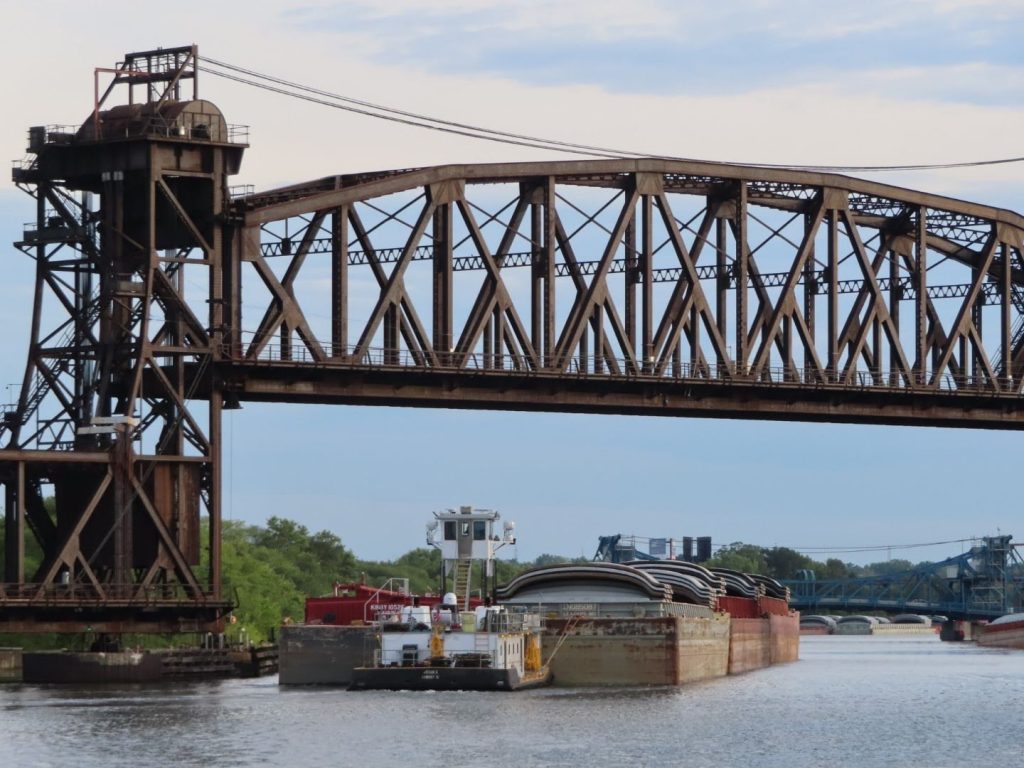
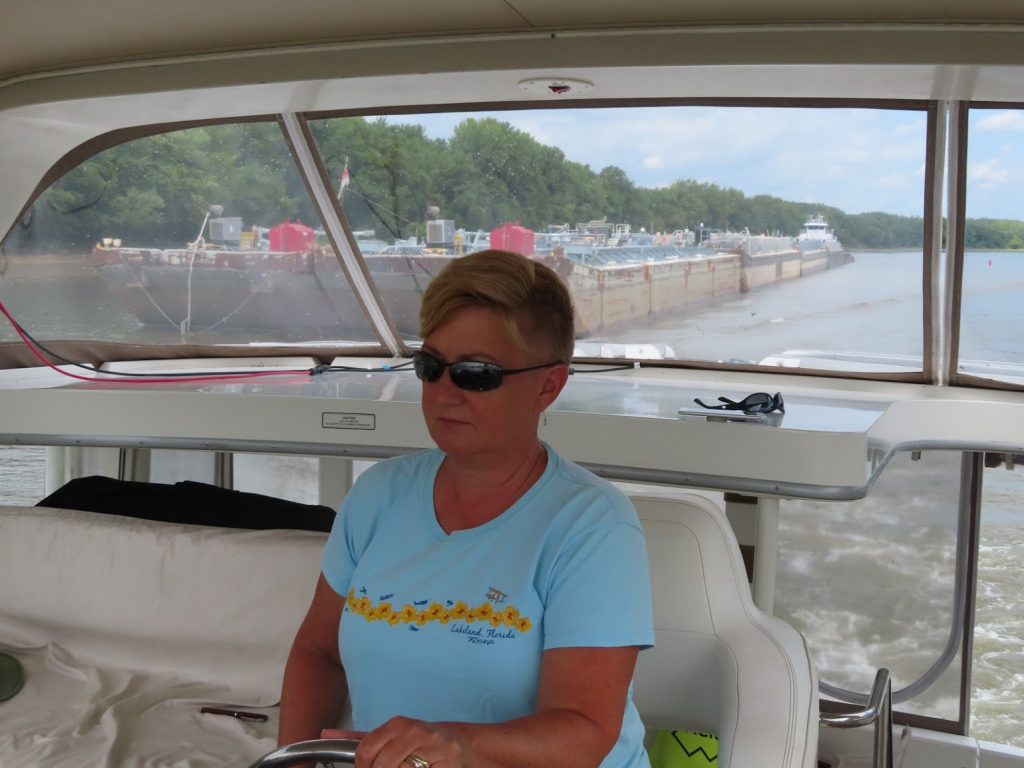
We love our AIS, which lets us see the position, movement, and most importantly name, of the tugs and tows up ahead. Is that one moving? Which way? What’s going to pop out of a staging lagoon? How far ahead is he?
We rapidly get into practice with hailing them on the radio, to work out when, and how, it’s safe to pass. It’s nice to be able to say “David Evans, this is At Ease, downbound pleasurecraft, half-mile out, how would you like me to pass?”, instead of “hailing the tugboat… I am a pleasurecraft way out in front of you, and….uh…want to pass you.” I can see them, and more importantly, they can see me, and have been watching me on their screens even before I call them, and can very easily work out whether I should hold back, or go by on the right (‘one whistle’) or on the left (‘two whistle’).
And then we get to this:
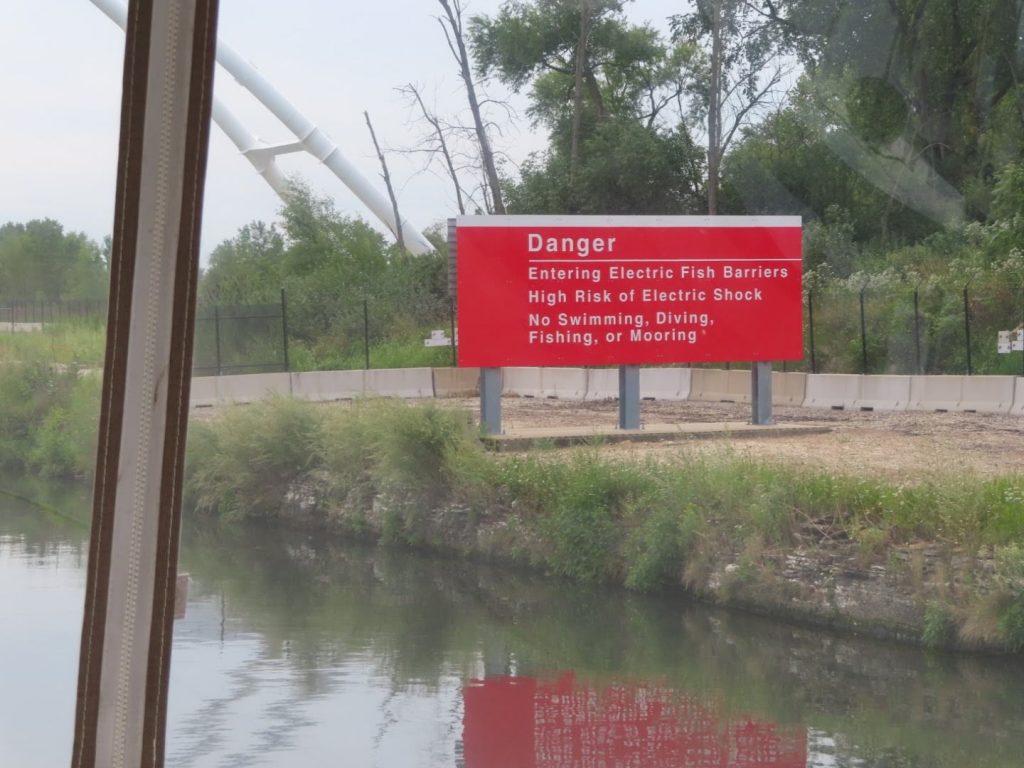
The barrier is to control the Asian Carp, an invasive species, that are making their way up the Illinois River. (More on them later.
Cue the soundtrack…
We come past the junction of the Calumet River, and some of the scenery become a little more bucolic. We are planning to make it to Joliet, to tie up at their riverfront park (for free!), after passing under a few lift bridges that the operator tells us are 16’6″. Hope we measured right!
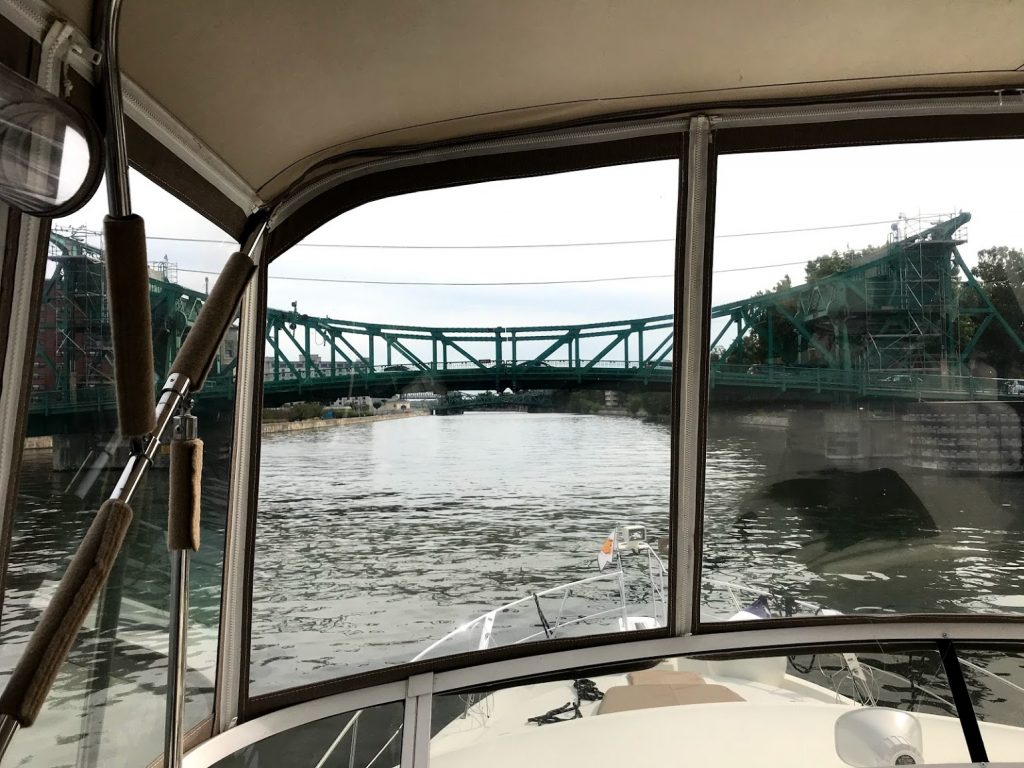
It was tight, but we did.
Later, from our spot on the Joliet wall, we watched the bridge lift for a tow.
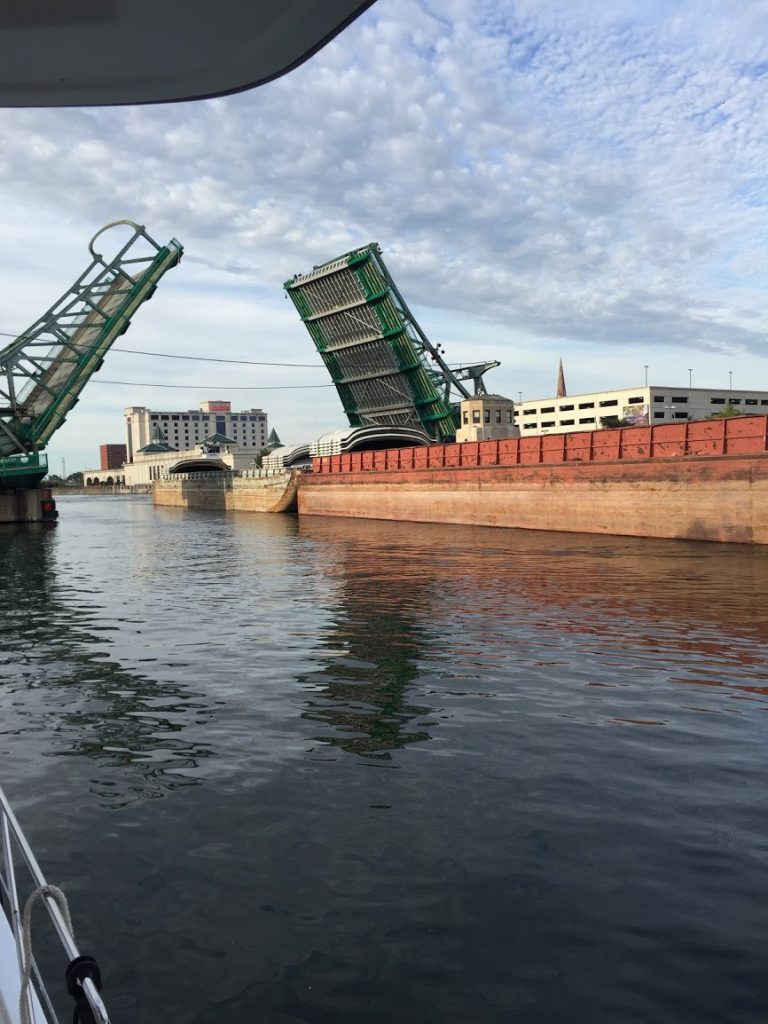
Later that evening we were contacted by another Looper boat, The Lower Place, coming in after dark; we helped them tie up, and then wound up traveling with them all the way to Alton, IL.
But that’s the next chapter…